

How can a foundation’s assets be managed in a way that generates a return and supports the foundation’s mission in the long term? To this end, the team at the asset management firm ECOFIN develops investment strategies tailored to the specific needs of each foundation.
When a foundation invests its assets, there is more at stake than simply the question of what return can be achieved. The assets are intended to help fulfill the foundation’s mission over the long term. It is precisely this connection between assets and the foundation’s mission that is at the heart of the work at ECOFIN Portfolio Solutions AG (ECOFIN).
The company is now led by Alexandra Janssen, the second-generation head, and has been advising institutional and private clients on investment matters for nearly 40 years. ECOFIN develops asset management strategies based on each foundation’s specific circumstances and serves as an independent advisor throughout the entire investment process: from investment organization and governance to strategy development, operational implementation, and monitoring. The ECOFIN team does not develop standardized solutions, but rather investment strategies tailored to the goals and obligations of each individual foundation.
Generalists with in-depth expertise
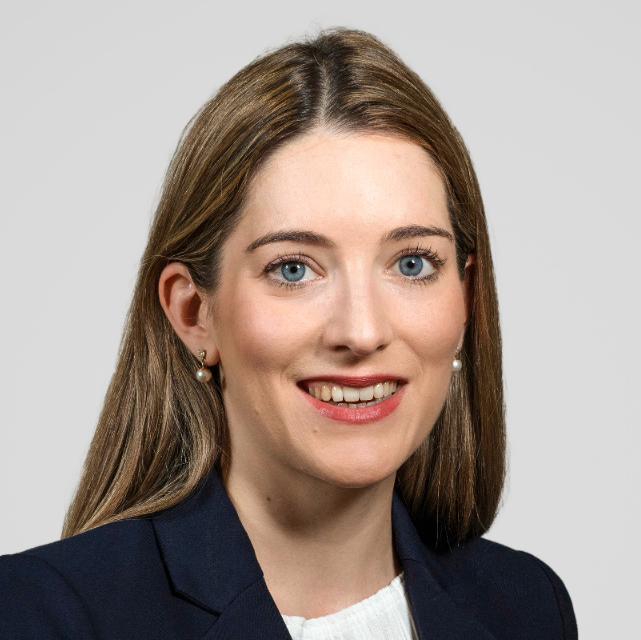
For ECOFIN, foundations are the largest and fastest-growing client group. Much of this growth comes from referrals by existing clients. “Our clients appreciate that ECOFIN understands the responsibilities of a foundation board and helps it fulfill those responsibilities through a transparent investment process,” says Alexandra Janssen, CEO of ECOFIN. The collaboration with foundations also shapes the way the company views its role as an asset manager. The team is intentionally kept small. “We’re not specialists working in silos, but rather experienced generalists with in-depth expertise who can competently address both strategic and operational issues,” says Janssen. “This builds trust that lasts for years.”
For foundation board members, this means a service that covers all aspects of professional investment governance, from organization and strategy to oversight. “It is this understanding of the needs of foundations that our foundation clients at ECOFIN particularly trust,” says Janssen. However, the connection to the world of foundations extends beyond consulting. Janssen teaches in the foundation board training program at the Center for Philanthropy Studies in Basel and understands the responsibilities firsthand from her own experience as a foundation board member.
The Right Strategy for Every Foundation
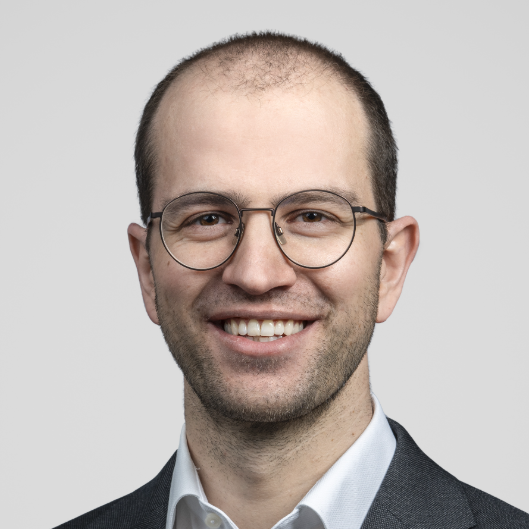
Lorenz Lees, Senior Advisor at ECOFIN, is also personally familiar with the world of foundations. He understands the different requirements that foundations place on investment strategies. Specifically, the strategy must align with a foundation’s obligations, time horizon, and structures. “Every foundation has different circumstances,” says Lees. Therefore, it is not just the return an investment promises that matters. “Equally relevant are the planned distributions, when liquidity is needed, and how much risk a foundation can bear.” This also brings the responsibility of the board of trustees into focus. “A strategy that the board of trustees understands, can explain, and trusts even during difficult market phases” is, for Lees, an important part of professional asset management.
Prepared for the Unexpected
The long-term viability of an investment strategy becomes particularly evident when market conditions change. At ECOFIN, potential developments are already factored into the investment process. According to Alexandra Janssen, scenario analyses and stress tests are not merely theoretical tools, but an integral part of the work: “You can never assume you know how the world will unfold, but you can prepare for the uncertainties.”
If you understand the foundation’s obligations and test them against various scenarios, you’ll find the strategy that’s truly the right fit.
Alexandra Janssen, CEO
That is why Janssen and her team analyze various market scenarios—ranging from an economic upswing to a geopolitical shock or a spike in interest rates. This is particularly relevant for foundations for two reasons. The first concerns methodology: “If you understand the foundation’s obligations and test them against various scenarios, you’ll find the strategy that truly fits,” explains Janssen. The second reason relates to the psychological aspect: “A board of trustees that knows its strategy has been thoroughly tested makes better decisions in turbulent markets.”
Investment Decisions Based on Empirical Evidence
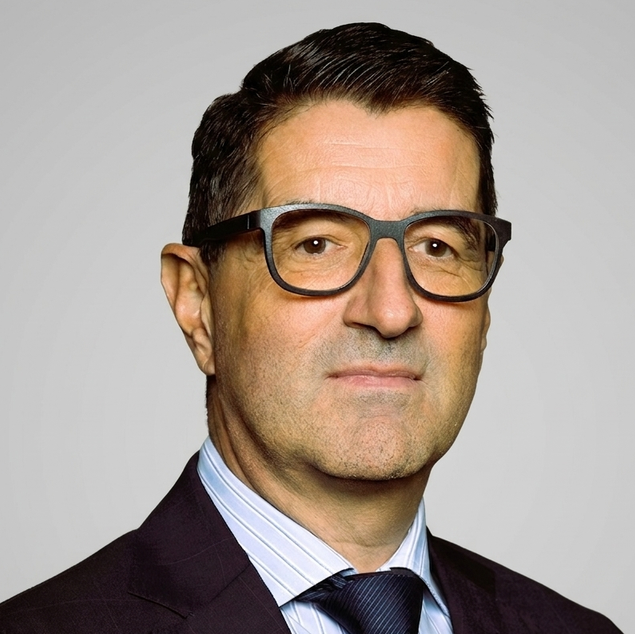
Bei der konkreten Umsetzung der Anlagestrategie richtet sich ECOFIN konsequent an der empirischen Evidenz aus. «Das ist möglich, weil ECOFIN als FINMA-regulierter Vermögensverwalter die erarbeitete Strategie selbst umsetzen kann und gleichzeitig keine eigenen Anlageprodukte anbietet», sagt Christoph Frick, Senior Advisor und Mitglied der Geschäftsleitung. «Durch diese Unabhängigkeit können wir die Lösung ausarbeiten, die für die jeweilige Stiftung am besten geeignet ist.»
We offer what many foundations are looking for but rarely find:
Christoph Frick, Senior Advisor and Member of the Executive Board
With more than 20 years of experience advising foundations, Frick has proven expertise in alternative investments. “In less efficient markets, active management is necessary,” says Frick. This applies in particular to private markets and other alternative investments. Since providers vary considerably in terms of quality, costs, and risks, professional analysis and selection are of crucial importance. “We offer what many foundations are looking for but rarely find: an asset manager who has a deep understanding of foundations—independent in advice, professional in execution,” says Frick.
Professional Support During Times of Change
At ECOFIN, managing a foundation’s assets is always linked to the question of what the capital is intended to achieve. “When a return is generated, it goes directly toward supporting the foundation’s missions, such as education, research, culture, or social projects,” says Frick. Collaboration with foundations therefore goes beyond mere asset management. Every foundation is unique in its purpose, size, and organization. “That makes the work exciting in terms of content and forces us to never settle for standard solutions,” says Frick.
This becomes particularly evident during periods of transition. For example, ECOFIN supports foundations that are restructuring, transitioning to endowment foundations, or undergoing major structural changes. The transition should be straightforward for the foundation’s board members, and the foundation should be able to continue fulfilling its purpose even under changed conditions. According to Lorenz Lees, a striking example is supporting a foundation through its sunset phase. In this process, the assets are distributed for specific purposes over several years before the foundation is dissolved. “The investment horizon is constantly shortening; assets are gradually being reduced and restructured, while at the same time, the foundation’s remaining capacity to provide grants is continuously assessed.” The goal: to fulfill the foundation’s purpose to the fullest extent possible, right down to the last franc. For Lees, it is precisely in such situations that the true meaning of understanding a foundation becomes clear: “There is no one-size-fits-all solution; each phase requires a fresh assessment.”
There’s no standard formula; each phase requires a fresh assessment.
Lorenz Lees, Senior Advisor
Asset Management in Transition
Asset management itself is also undergoing change. For ECOFIN, the most significant structural shift is the shift toward passive investing: The market is increasingly moving toward index-based and cost-effective strategies. “We’ve been pursuing this direction for decades,” says Janssen. What is often underestimated, however, is that index-based investing also requires specialized knowledge. “ECOFIN has a head start here that has been built up over many years. For example, ECOFIN developed the first Swiss stock and bond indices—the SMI, the SPI, and the SBI—and has calculated them for years.” With index-based solutions, clients also benefit from institutional terms, which ECOFIN can pass on even to foundations with smaller investment volumes thanks to its pooled investment volume.
At the same time, artificial intelligence is making its way into operational processes. According to Janssen, analysis, reporting, and data evaluation can now be carried out more efficiently. For a boutique team like ECOFIN, this frees up capacity that can be directly channeled into client service. What has changed less, in her view, is the product complexity and lack of transparency in the industry. Complex structures, hidden costs, and offers that are difficult to compare remain a challenge. “This is especially true for foundations, which are required to be accountable. This is precisely where the value of independent advice lies,” says Janssen.