
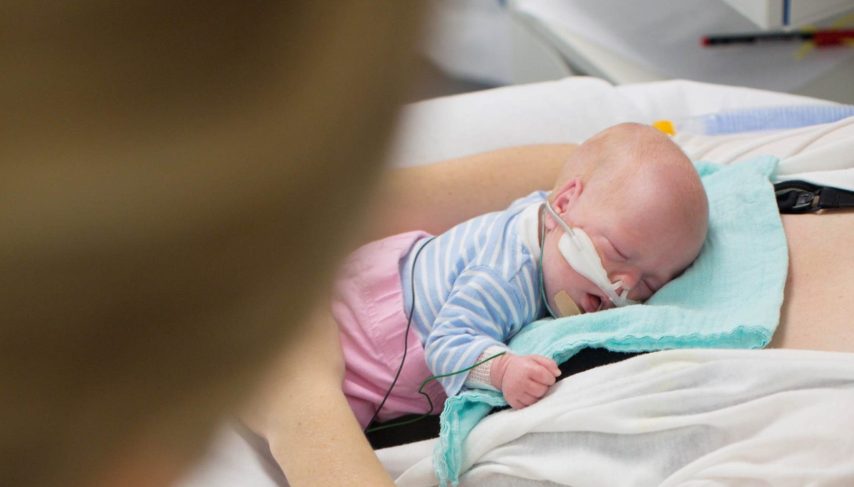
A premature birth presents families with an extraordinary situation. Amid the monitors, sounds, and many uncertainties, there is often little room for what is otherwise taken for granted during the postpartum period: closeness. The amiamusica organization brings music to the neonatal unit, thereby connecting parents with their premature babies.
A baby is born prematurely. The premature baby and his or her parents suddenly find themselves surrounded by beeping machines, unfamiliar voices, and unfamiliar routines. Mothers and fathers have to navigate a situation for which no one can truly prepare them. Touching, holding, soothing, breastfeeding: Many things that seem second nature when caring for a newborn simply aren’t possible under these circumstances.
And then there’s the music.
Music from the Very Beginning
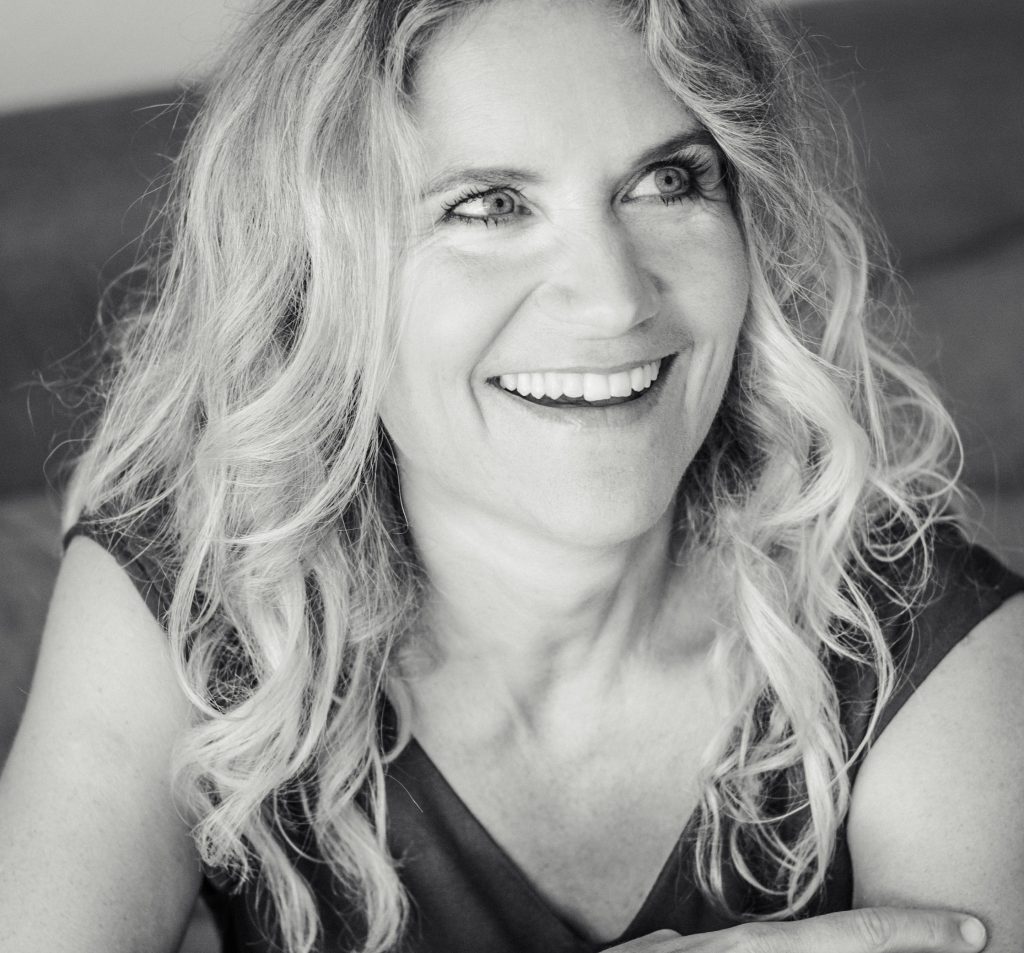
Gentle sounds and soothing voices can foster a sense of closeness, even when a child is in an incubator. The nonprofit organization amiamusica volunteers its time to provide music for premature and sick newborns and their parents. Various studies show that this music therapy can help premature babies regulate their systems and also positively influence their parents’ well-being. “Music creates a sense of closeness when touch or direct contact isn’t possible,” says Dr. Friederike Haslbeck, president of amiamusica, a music therapist, and a researcher. “Parents can use their voices to show their child: ‘I’m here.’”
“Music creates a sense of closeness when physical touch or direct contact isn’t possible. Parents can use their voices to let their child know, ‘I’m here.'”
Dr. Friederike Haslbeck
The amiamusica association is made up of volunteer parents, musicians, therapists, medical specialists, and caregivers. They bring together a wide range of experiences and make knowledge about music and preterm birth accessible. This expertise is intended to reach families as early as their time in the hospital. The organization develops informational and instructional materials that those affected can use directly in their daily lives. These include songbooks that encourage parents to sing and make music with their children. Information and practical insights about music in neonatology are also available online. “On the one hand, we want to convey knowledge about the effects and meaningful use of music,” says Haslbeck, “and at the same time, we encourage parents to take an active role themselves.”
Empowering Parents
The point is not for parents to make as much music as possible. On the contrary: In the neonatal unit, the focus is on the individual child’s situation. The informational materials on acoustics, voice, and music developed by amiamusica therefore establish a clear guiding principle: Avoid overstimulation and pay attention to the needs of the individual child. Whenever possible, parents should also use their own voices. This can be a way for them to take an active role during what is often a difficult time.
“Many parents feel helpless after a premature birth because they have little control over the situation,” says Haslbeck. Medical decisions are made by professionals, and daily life is dominated by medical exams and equipment. “Music can play a different role here,” says Haslbeck, “by having parents sing, hum, or sing a song to their child themselves.” For the president, it is precisely this practicality in everyday life that is crucial. Music should not be another program that parents have to juggle. It should fit into the situation and make use of what’s already there: the voice, a song, and many shared moments.
Low-Threshold Donations
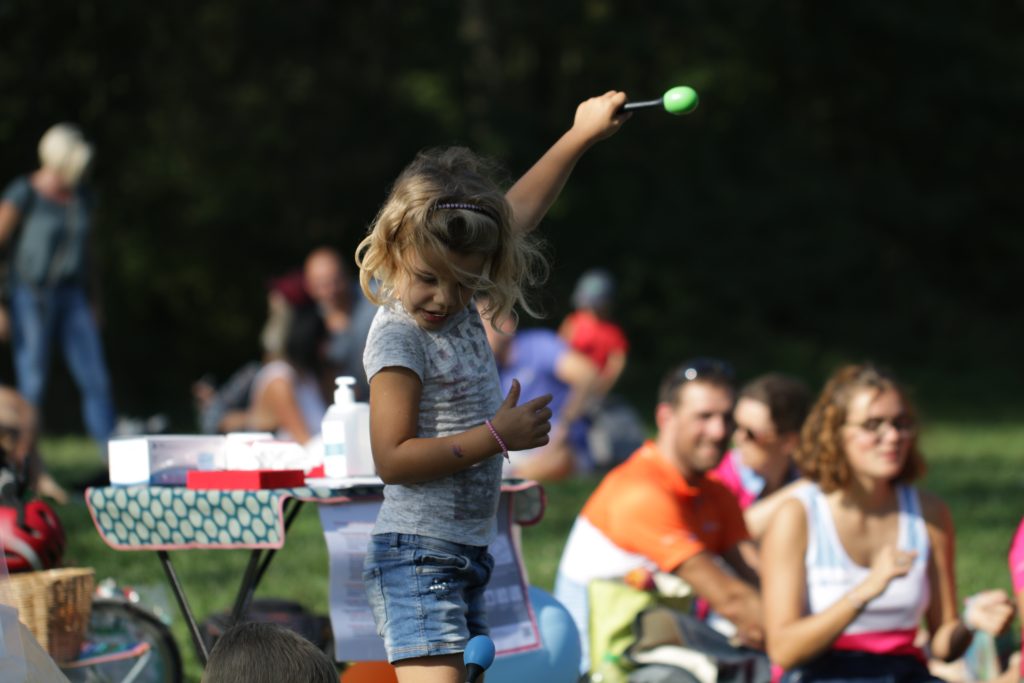
amiamusica’s work also brings families together at events. At the music picnics, families gather, listen to music, sing, and strike up conversations with one another. For a small organization in particular, this is also important for funding. amiamusica operates on a volunteer basis and funds its projects through membership dues, donations, and charity events. “That’s why a simple idea came about for the music picnics: Anyone who wants to contribute but doesn’t have cash on hand can still donate right there on the spot,” says Haslbeck.
The solution lay in a small QR code. These can be generated through the SpendenSchweiz donation platform. “At the music picnics, there are now flyers with a QR code that lets people donate directly using their smartphones.” The first events showed that the idea worked. A total of about 2,400 francs was raised for amiamusica and a music project from 34 people. “We’re now generating higher donation proceeds at digital fundraising events compared to traditional cash donations,” says Haslbeck.
The president is a fan of simplicity: “QR codes don’t require any complex technology and make donating very accessible.” The digital solution also keeps administrative overhead to a minimum. Donations are processed through Spheriq’s donation platform; confirmations are sent automatically, and amiamusica receives a consolidated payment. “Those who prefer to donate the traditional way can, of course, continue to use a payment slip or the donation box,” says Haslbeck.
A Hub for Music and Premature Birth
amiamusica’s events demonstrate how music brings people together. “We don’t just want to develop our own programs; we want to bring people and knowledge together,” explains Haslbeck. Parents meet with experts, musicians with therapists, researchers with those affected, and sponsors with projects. “In the long term, we want to become a central platform and hub for premature birth and music in Switzerland,” says Haslbeck. This requires more than just individual songbooks or events. “Music should be more firmly embedded in health, social, and educational systems. To achieve this, we want to develop new programs together with the target groups.” This task goes far beyond simply making music. “It’s about how parents can be supported in a difficult life situation and what role they themselves play in that process,” says Haslbeck.
Most people have a voice. Many listen to songs with their unborn child as early as during pregnancy. Children in the womb hear melodies and feel rhythms. These are resources that create shared moments of closeness.
Dr. Friederike Haslbeck
And yet simplicity seems to be the special ingredient in amiamusica’s recipe: music is understood as something very simple that people already possess. “Most people have a voice. Many listen to songs with their unborn child as early as during pregnancy. Children in the womb hear melodies and feel rhythms. These are resources that create shared moments of closeness,” says Haslbeck. For families dealing with a premature birth, this can foster a sense of closeness that doesn’t depend on medical equipment or specialized knowledge. And for the child, it provides a familiar sound in an environment where so much is unfamiliar.