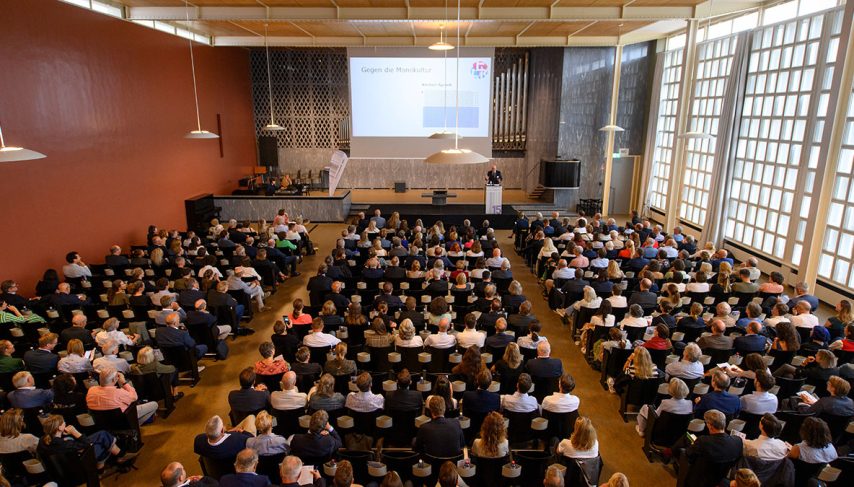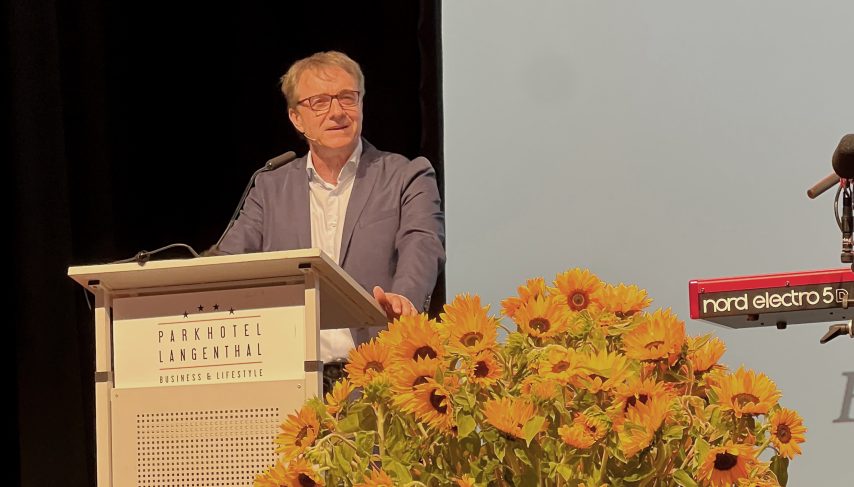


How much freedom do foundations need, and how much oversight? The 8th Zurich Foundation Law Conference will focus on foundation governance. Dominique Jakob, professor of private law and director of the Center for Foundation Law at the University of Zurich, speaks in advance about the challenges facing the foundation sector and why it must prepare for the coming decades.
Mr. Jakob, what are the current “hot topics” and “hot takes” in the law governing charitable foundations?
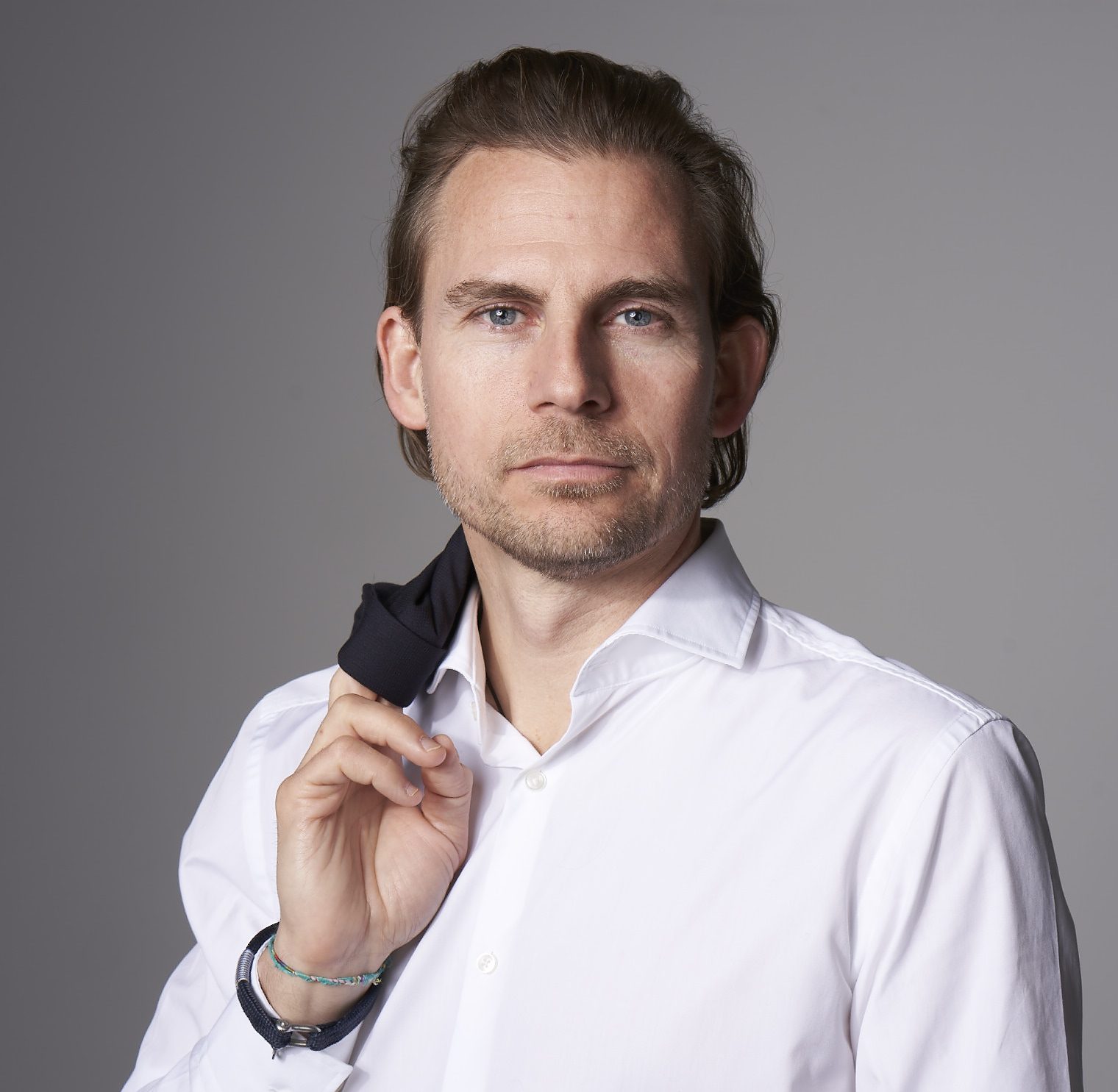
We are seeing the first effects of the 2024 reform of foundation law, a new regulatory landscape, new trends in asset management, and ongoing challenging discussions with the tax authorities. At the same time, new transparency and anti-money laundering regulations are coming into effect for the sector. And we are still awaiting the implementation of the liberalization of Swiss family foundations, as approved by Parliament. In short: The environment is becoming more complex, and the demands on foundations and foundation boards are increasing. Poor organization, unresolved conflicts of interest, or neglected duties can be disastrous in such an environment. This brings me to my overarching—and at the same time “hottest hot topic”—: modern and balanced governance.
In your view, what are the biggest governance challenges that Swiss foundations will have to address in the coming years?
The top priority is to further professionalize foundation boards. “I didn’t know that as a volunteer layperson” can no longer be an excuse today. At the same time, foundations must be set up with sound organizational structures from the very beginning. This begins with the founder: the founder’s freedom also entails the founder’s responsibility—in particular, the responsibility to establish meaningful checks and balances. And it continues with the board of trustees, which must ensure the organization functions properly and identify and resolve conflicts of interest.
Governance, therefore, must not only be regulated but also put into practice.
Exactly. My view is this: good self-regulation is better than external regulation. The less regulatory agencies and courts have to intervene, the better a foundation functions—and the more credible and professional the entire sector appears.
Switzerland has a liberal foundation law, but internationally, the trend is toward greater transparency and accountability: How much oversight do foundations need, and how much freedom should they have?
I’ve been saying for many years: The right balance of freedom and governance is what makes a successful location for foundations. The Swiss model stands out for its extensive freedom for founders and organizational autonomy, combined with effective, increasingly risk-oriented legal oversight and attentive tax authorities. Added to this is a sector that itself is committed to transparency, good governance, and self-regulation. How much additional, legally mandated transparency is needed beyond that is ultimately a political question. Combating money laundering, terrorist financing, and tax evasion is an absolutely legitimate concern. What is crucial, however, is to regulate with a sense of proportion and expertise. Regulation should target risks specifically—and not burden the overwhelming majority of properly operating foundations in the long term with an ever-increasing number of obligations.
Regulation should be aimed at addressing specific risks—and not at burdening the overwhelming majority of foundations that operate properly with an ever-increasing number of obligations over the long term.
Prof. Dr. Dominique Jakob
At the conference, you will be speaking about the organization and governance of the (new?) Swiss family foundation. Is the family foundation as it exists today in Switzerland still relevant? Should it be modernized?
This is indeed an issue that has been on our minds for a long time. In Switzerland, around 100 billion Swiss francs are inherited every year, yet there is no suitable instrument available for intergenerational estate planning or business succession. As a result, those in need of planning must turn to foreign options, such as a Liechtenstein foundation—which we then generally recognize in Switzerland without any oversight. In doing so, we relinquish control not only over assets but, above all, over governance, and leave value creation to other countries.
What is the reason for this?
The reason isn’t even the law itself, but rather outdated case law from the 1950s that places too many restrictions on how our family foundation is managed. Parliament has recognized the need for reform and, in February 2024, passed the motion to liberalize Swiss family foundations. Now we are waiting for the Federal Council’s implementation proposal, which is six months overdue. There is one thing I would like to emphasize here: This is not about granting new privileges to the ultra-wealthy, attracting obscure foreign assets, or creating new avenues for money laundering and tax evasion. On the contrary: With a fully functional Swiss family foundation, we would have governance in our own hands, and the structures would be administered in accordance with Swiss law, involving Swiss registries, authorities, and courts. This would significantly improve legal certainty and governance in the foundation sector and the financial center.
In light of the data breach at Stiftungsplatz Liechtenstein and the Benko affair, the focus on public benefit in the Swiss foundation model also emerges as a strength. If private-benefit foundations were now to be strengthened here as well, what would that mean for the acceptance and appeal of charitable engagement?
Charitable and private-purpose foundations are not mutually exclusive. Rather, they can complement one another—consider, for example, charitable foundations that own large companies, or hybrid foundation models. And anyone who establishes a family foundation abroad will generally also carry out their charitable activities there. An effective foundation jurisdiction should therefore provide appropriate instruments for a variety of legitimate needs. The charitable foundation undoubtedly remains the flagship of the Swiss foundation sector. But precisely for this reason, we should also insist on high standards for private-benefit structures. When foreign foundation models make headlines due to scandals, the term “foundation” as a whole quickly suffers. This is yet another reason why there is a strong case for taking greater control of the governance, transparency, and legal certainty of private-benefit foundation structures.
When foreign foundation models make headlines due to scandals, the term “foundation” as a whole quickly suffers. This is another reason why there are strong arguments for taking greater control of governance, transparency, and legal certainty within private-benefit foundation structures.
Prof. Dr. Dominique Jakob
Back to the “Hot Takes”: How can foundations continue to achieve as much social impact as possible even in ten or twenty years?
I’m less concerned about whether foundations will still have a social impact in twenty years. On the contrary: their importance is likely to continue to grow. In the coming years and decades, enormous fortunes will be passed on to the next generation, and a portion of that will flow into foundations. Take the Kühne Foundation, for example. As a result, individual foundations will reach scales that we have hardly seen before in Switzerland.
How can the Swiss foundation sector prepare for these new dimensions?
It is all the more important to position the sector well now: to embed governance in people’s minds, create professional structures, and maintain a constructive dialogue with supervisory and tax authorities. This is how we can best prepare the foundation sector—for today’s challenges and for whatever the future may bring.
8th Zurich Foundation Law Day #Governance2030
Foundations need autonomy as well as sound governance. The conference will examine contemporary internal and external governance mechanisms, ranging from the drafting of bylaws and oversight to tax exemptions and the specific challenges faced by different types of foundations. Through a dialogue between academia and practice, it demonstrates how foundations can make their governance future-proof and strengthen their impact.
Date and time: January 28, 2027, 9:15 a.m. to 5:15 p.m.
Venue: University of Zurich
Register now