

Two remarkable initiatives demonstrate how strategic philanthropy can systematically embed participation: Talking Stick promotes the participation of migrants, and a newly established citizens’ council in Basel aims to involve people without the right to vote or hold office in political decision-making. Both initiatives require institutional financial support.
Talking Stick was launched as a project to develop a practical guide titled “Space for Participation,” which facilitates the effective participation of people with a migration background. The organization IntegrationsBrücke Bern developed the guide over the course of two years in collaboration with 150 people with a migration background, working in seven dialogue groups and across nine languages. The Federal Commission on Migration, the Migros Culture Percentage, the Beisheim and Temperatio Foundations, and the Swiss Society for Social Welfare (SGG) made this work possible. They supported the project—and thus the people involved—to gain insights into the processes. The financial support focused, among other things, on compensation for attendance, childcare, meals, and costs that supporting organizations classify as “overhead.” The Talking Stick concept demonstrates that ensuring the participation of structurally excluded people is the actual work—not the accompanying process. It is not something that simply happens. Facilitation builds trust, facilitates communication, reaches people where they live, and bridges languages and perspectives.
Systemic Gap Between Knowledge and Implementation
An uncomfortable realization is that a precise blueprint is necessary but not sufficient. Talking Stick puts it this way: “The guide is like the blueprint for a complex train. Just because you have the blueprint doesn’t mean you can build a train. It requires specialized tools, expertise, and a robust infrastructure.”
In other words: There is a gap between theoretical conception and the ability to implement it, a gap that can only be bridged through continuous financial support spanning several years. The concept works because partners like IntegrationsBrücke Bern had already established relationships with communities. This groundwork is crucial. Engaging marginalized groups does not require standardization, but rather specialization. And that comes at a cost. This insight is certainly relevant for the future People’s Council in Basel as well.
The Basel Citizens’ Council and the Question of Legitimacy
The Basel Citizens’ Council also addresses a structural problem. Only 49.7 percent of Basel’s population is eligible to vote, and of those eligible, only about 44 percent actively exercise their political rights. In effect, this means that only about a quarter of the population decides on political issues. While Talking Stick asks, “How do we reach people?”, the Basel Citizens’ Council asks, “How do we enshrine participation in law and politics?” How does a democracy with binding decisions work?
Now we must evaluate and examine ways in which the legitimacy of a citizens’ council could be established. The concept is simple: individuals selected by lottery deliberate on political issues. However, it only has an impact if its recommendations are actually taken into account.
The Basel pilot project is exploring ways to integrate citizens’ assemblies into existing decision-making processes so that the legislature, the government, and the administration are compelled to take their recommendations seriously. The goal is not to replace parliamentary democracy, but to complement it in a targeted manner.
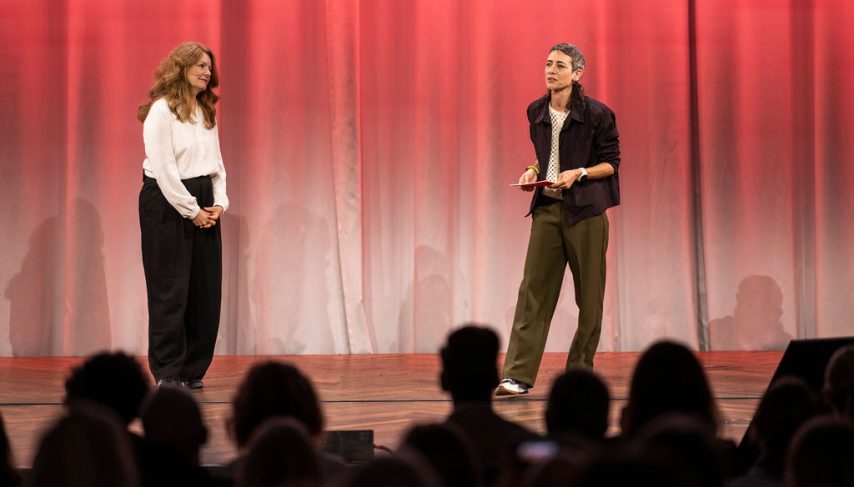
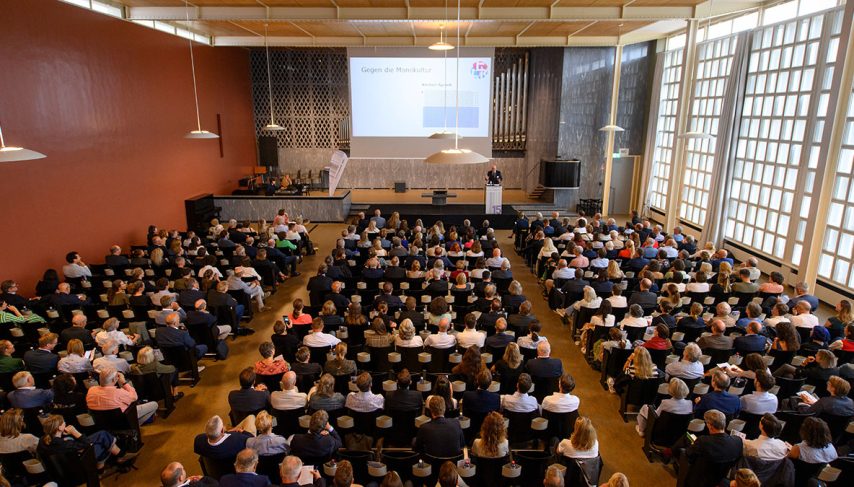
Setting up such an initiative is resource-intensive, just as it was with Talking Stick. After the first major kickoff event at the Safranzunft in Basel, resources are needed to bring together a wide variety of people—old and young, academics and working-class individuals, Swiss nationals and immigrants—in a variety of ways. And it requires access to the relevant communities and funding for research and fine-tuning the processes. In addition to foundation funding, the team behind the Basel People’s Council is relying on “co-ownership” (small donations) through share certificates. The goal is to establish a sustainable institutional structure.
A Comparison of the Two Concepts
| DIMENSION | TALKING STICK | BASEL POPULATION COUNCIL |
| Core problem | Exclusion of Participants | Lack of legitimacy of decisions |
| Approach to a Solution | Admission through a referral | Structure Through Institutionalization |
| Financial Logic | Litigation Costs & Compensation | Hybrid: Investment shares + institutional partners |
| Timeframe | Limited Workshop Phase | Continuous Integration |
| Scaling | Multiply Expertise | Pilot → Legal Consolidation |
| Success criterion | Inclusive Participation Practices | Legally Enshrined Right to Have a Say |