
A new research report, commissioned by the Foundation for Art, Culture, and History (SKKG) and Terresta, with support from the Swiss Historical Society (SGG), systematically documents for the first time how Bruno Stefanini built his real estate business and his art collection. The findings highlight the differences between philanthropic aspirations and business reality. With the publication of this report, the SKKG continues to pursue its mission in a consistent and transparent manner.
The Foundation for Art, Culture, and History (SKKG) in Winterthur has thoroughly documented the foundation’s origins and history. A new research report by historians Jennifer Burri and Amos Kuster from Basel traces how Bruno Stefanini built his real estate empire and his art collection. As it now turns out, money flowed from the real estate into the collection. Stefanini linked his collection and real estate by viewing the objects in his collection not only as cultural heritage but also as capital investments. He compared the appreciation in value of works by painters such as Hodler to real estate returns. Consequently, this resulted in a steadily growing asset value in the foundation’s accounting records. The report sheds light on an integrated system that connects Stefanini’s two seemingly independent passions—building and collecting.
This new research complements the existing history and reveals a complex web of economic decisions—the story of an art patron with concrete consequences.
From Curator to Financier of the Collection
Stefanini’s career began unremarkably. As a young man, he managed real estate for the Italian community in Winterthur. The postwar economic boom enabled him to rise quickly through the ranks. He became one of the first general contractors in the region to offer a full range of services covering the entire real estate cycle—with the corresponding cost and power advantages. The 1973 oil crisis then marked a turning point. Stefanini ceased residential construction and focused on acquiring additional properties. With this strategic realignment, he deliberately transformed his real estate portfolio into a financing instrument. Increasingly, the rental income from the portfolio was to serve as a source of funding for the art collection and, by extension, for the foundation.
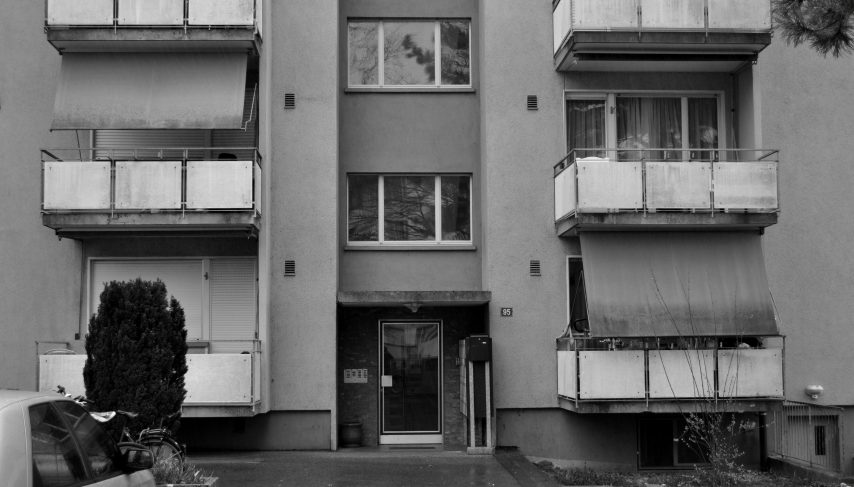
The consequences of this reprioritization were measurable. Apparently, the years-long backlog of renovations in the real estate portfolio was not due to negligence, but rather the result of a deliberate choice of priorities: Rental income was funneled into the collection rather than into the properties. For tenants, this meant waiting lists for maintenance; for the properties, it meant delayed modernization.
Collecting Strategy: Breadth Over Depth
Stefanini himself repeatedly referred to the SKKG collection, with a touch of self-deprecating humor, as a “cabinet of curiosities.” According to the report, he deliberately used this characterization to distinguish himself from classical art history. This approach continues to shape the collection to this day: breadth over depth. The goal was to build a collection that was as diverse as possible, with the intention that it would one day serve as the foundation for a popular museum accessible to a broad audience. The figures show how this strategy was implemented. About 90 percent of the objects entered the collection through auctions; acquisitions largely followed what was available on the market. This naturally means that the collection’s philosophy lacked coherence. The most intensive phase of acquisitions occurred in the second half of the 1980s. In 1988 alone, over 3,000 objects were added to the collection, fueled by plans to turn Brestenberg Castle into a museum. After the failure of this project, the number of acquisitions dropped significantly. Much of what Stefanini acquired often disappeared, unseen, into boxes and storage facilities.
Cultural Heritage as an Investment
Treating the collection as an investment had far-reaching implications. It can also be interpreted to mean that the collection—despite its philanthropic rhetoric—also served the purpose of generating returns. Public access, a classic feature of philanthropic art collections, was, as it turns out, not the primary goal. In fact, Stefanini reserved the right throughout his life to revoke the foundation’s usufruct rights to the real estate and the collection. This legal arrangement restricted the foundation’s ability to act and meant that, during its first decades, the SKKG barely fulfilled its charitable obligation to make the collection accessible to the public. A philanthropic promise that existed on paper could not be fulfilled in practice for many years.
Provenance Research: Transparency and Legally Enforceable Processes
The Institute of Art History at the University of Zurich has been conducting systematic provenance research since 2022. The goal is to clarify the history of works that may have been taken from their owners in the context of Nazi persecution. Stefanini acquired most of his art collection in the 1990s through Swiss auction houses. This was a critical period because, in the postwar years and the decades immediately following, looted artworks found their way into new collections via the art market. Provenance was rarely questioned at that time. The SKKG has established a two-step process for this, ensuring a clear separation between provenance research and the decision on how to handle the findings. A team of independent researchers investigates the provenance history; an independent commission (UK-SKKG) then makes decisions regarding restitution or other just and fair solutions.
In May 2026, the UK-SKKG restituted the painting“Lake Thun with Blüemlisalp and Niesen”(1876/1882) by Ferdinand Hodler to the community of heirs of the former owner, Martha Nathan, who, as a Jewish woman, was persecuted by the Nazi regime. The sale of the painting at that time was directly linked to Nathan’s dire circumstances. Beyond the restitution, the SKKG plans to make the story of the former owner accessible to the public. A new understanding of the SKKG’s foundation work views cultural heritage not as a static possession, but as a living resource, as the SKKG writes.
Current Strategies and New Challenges
The SKKG is responding to these findings with a multi-pronged strategy. Since 2018, the collection—which comprises over 100,000 objects—has been systematically inventoried. Since 2025, most of the objects have been viewable via the “Sammlung digital” portal, and the collection is set to become more physically accessible starting in 2030 at the foundation’s newly planned headquarters, “CAMPO,” in Oberwinterthur.
Terresta, the real estate division of SKKG, strives to maintain a balance. A two-pronged strategy combines affordable rents for existing properties with new construction at market rates. The goal is to ensure fair rents while also securing funding for the foundation’s activities.
SKKG and Terresta are thus attempting to address this structural situation and to invest in cultural work, provenance research, and the preservation of fair housing conditions using a diverse, and in some cases invisible, set of resources.
A Clear Analysis
With its new research report, the SKKG is taking an open-minded and proactive approach to its history. It is using this review as an opportunity for critical reflection. The report contains redacted sections. These pertain to objects or matters that are the subject of ongoing provenance investigations, the SKKG writes.
Debating Unresolved Issues
How should the collection be treated as a historical artifact? Should it remain “frozen in time”—as a record of Stefanini’s taste and priorities? Or should it be reinterpreted from new perspectives, given that the values on which it is based have changed? Asking these questions and debating them publicly is certainly an important conclusion that the SKKG has drawn from its review of the past.
Click here to view the full research report.
Click here for the Swiss Historical Society.