
With “Steps to the Next Badge,” organizations can see which badges their profile already has—and what specific information, evidence, or activities are still needed to earn the next badge.
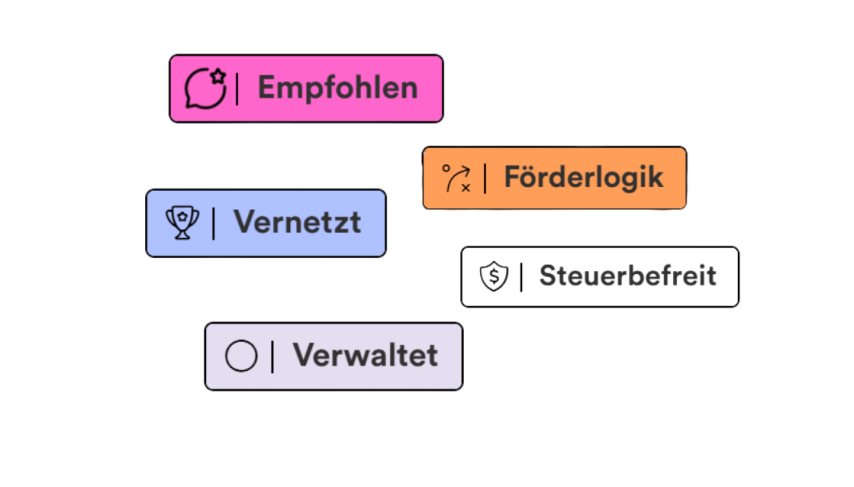
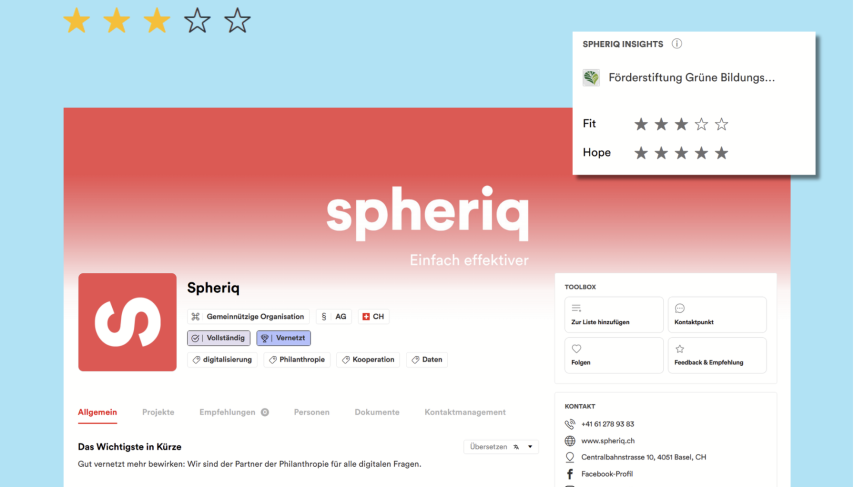
On Spheriq, badges show how active, comprehensive, transparent, and connected an organization is on the platform. They are more than just an extra feature on a profile: Anyone visiting an organization’s profile can quickly see whether it is being maintained, whether key information is available, and whether the organization is providing a clear overview of its activities.
A badge that sends a strong message
The badges are also displayed when a nonprofit organization submits a grant application to a participating funding organization via the Spheriq platform. This allows the funding organization, for example, to see at a glance how transparently and diligently an applicant documents its activities. It can also quickly determine whether the applicant organization has verified tax-exempt status. Badges are therefore important indicators. For many organizations, it’s not just a matter of what badges are available, but more importantly: Why haven’t we received a particular badge yet?
This is exactly the question our support team receives on a regular basis. An organization has carefully completed its profile, uploaded documents, or entered statistics—and yet the expected badge still doesn’t appear. Often, it’s not a major overhaul that’s needed, but simply a single field, a piece of evidence, or a requirement that isn’t immediately obvious in the profile. The “Steps to the Next Badge” prompt launcher quickly provides an overview here.
What Spheriq AI does
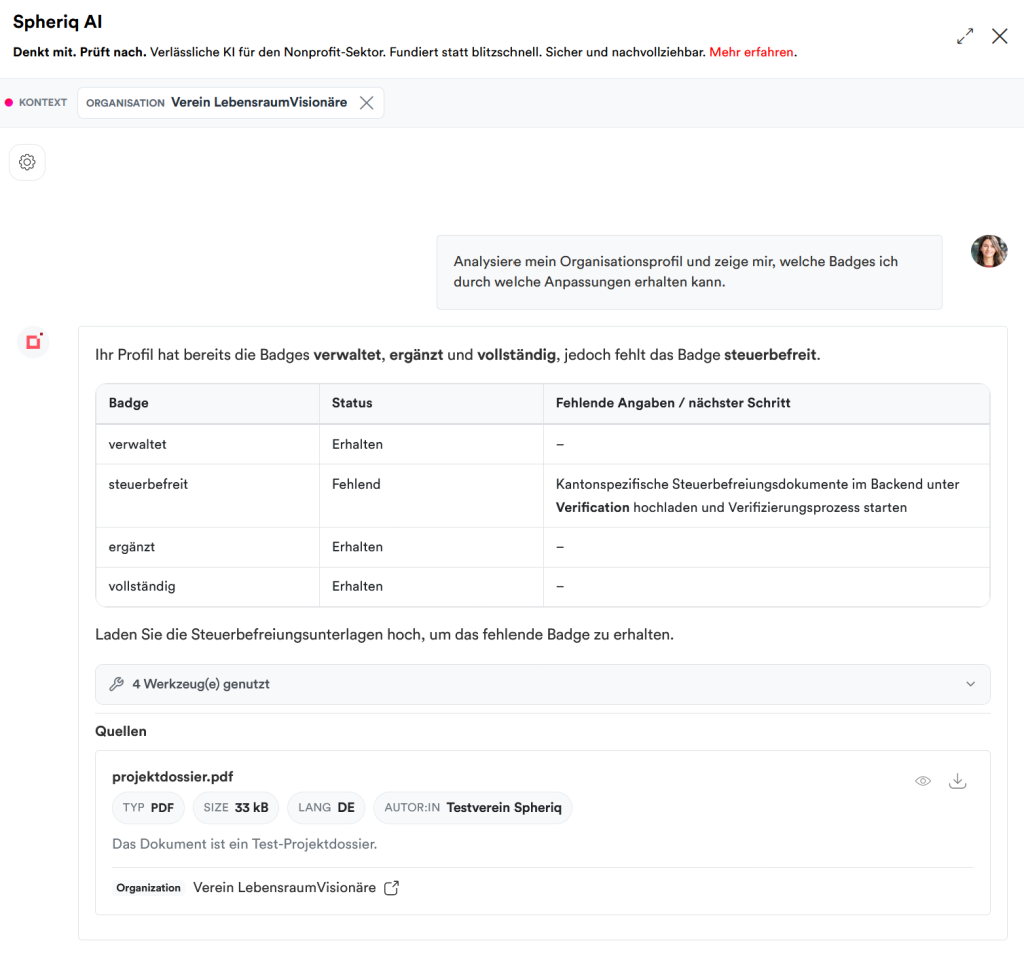
The prompt is launched on the user’s own organization profile. Spheriq AI retrieves the available profile information and compares it with the requirements for each badge. Instead of looking up the requirements one by one and comparing them with the stored data, users receive an assessment tailored to their organization: What status has already been achieved? What’s still missing? And what’s the next logical step?
Spheriq AI presents the results in a table. For each relevant badge, the response shows the current status and, if badges are missing, lists the information or actions still required. For example, if the “supplemented” badge is missing, the AI may point out additions such as an image or logo, contact information, or current areas of focus. For the “complete” badge, projects, SDGs, or documents may be relevant. For the “engaged” badge, annual statistics from previous years may play a role.
This prompt is therefore particularly useful after a profile update or before submitting an application. Or when an organization believes it has already met the requirements for another badge.
In everyday life
For a nonprofit organization, the prompt can serve as a simple tool for prioritizing. Suppose a profile is already being managed but does not yet display any badges. The analysis shows that, to start with, a logo, complete contact information, and current areas of focus are missing. Instead of revising the entire profile all at once, the organization knows which additions make the most sense to add first. Afterward, it can upload projects, documents, or annual statistics and prepare the next steps.
This approach is also relevant for funding organizations. A detailed profile with complete information and visible activity makes it easier for nonprofits to properly assess the organization. Demonstrating transparency and networking further strengthens the foundation for relevant inquiries and collaboration on the platform. The prompt not only highlights gaps but also makes progress visible and translates requirements into concrete tasks.
Badges help make profiles on Spheriq more transparent. This makes it clear at a glance which information has been added, verified, or actively maintained. This makes it correspondingly easy for other stakeholders to assess an organization. At the same time, well-maintained data provides a better foundation for further AI-supported processes, such as matching, scouting, or preparing for potential partnerships.