

The German Foundation Day in Hamburg was held under the theme “Acting Out of Freedom.” The discussions, panels, and workshops made it clear that this freedom can no longer be conceived of today without considering the issue of artificial intelligence. After all, AI has long since ceased to be merely a new tool in the foundation sector—it is a test of how consciously, transparently, and responsibly foundations intend to make decisions in the future.
Freedom is a big and important word in the world of foundations. Foundations can set the agenda, act with a long-term perspective, and operate independently of political election cycles or market logic. That is precisely where their strength lies. We see every day that this freedom is under threat, given current global events. But the concept of freedom is also under pressure in the day-to-day work of foundations for another reason: namely, when technology accelerates processes, makes knowledge available, improves applications, and changes the basis for decision-making.
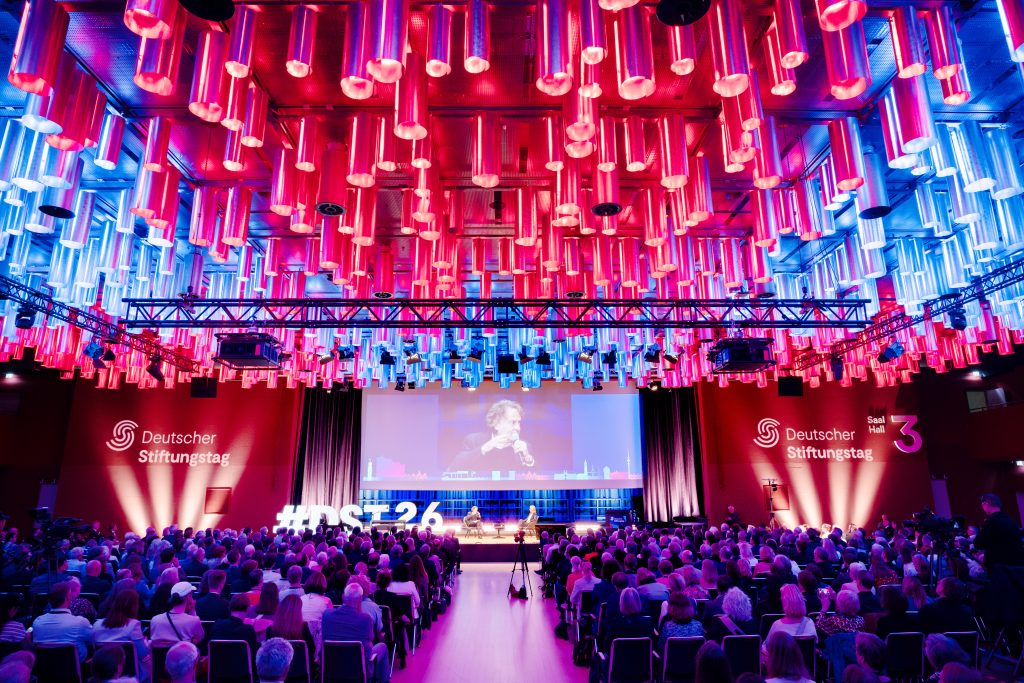
Freedom as a Motto, AI as a Reality Test
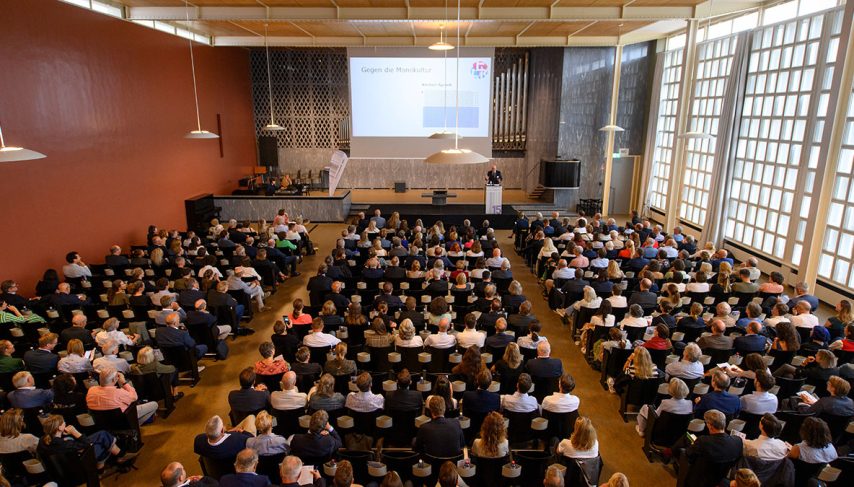
The German Foundation Day, held on May 20 and 21 in Hamburg, attracted over 2,000 visitors. It treated the concept of freedom not as a cheap cliché, but as a call to action. And that is precisely why it was only natural that AI came up in so many conversations—not always as the main topic, but increasingly as a backdrop. Anyone talking about freedom in the foundation sector today is also talking about how decisions are made today. Specifically: how an organization continues to exercise its judgment in the age of AI.

This is not a theoretical debate. Many of the conference’s panels and presentations show that: AI has long since found its way into very practical applications, such as digital application management, data-driven approaches (like the Culture Atlas and Funding Compass for Bavaria), and the secure use of generative AI models in day-to-day organizational operations (the approach taken by the Polytechnic Society Foundation in Frankfurt am Main is particularly impressive in this regard). And, more generally, in addressing the question of how to turn scattered knowledge into a robust basis for decision-making (as is being done, for example, by the Hamburg Community Foundation ).
Between Euphoria, Overwhelm, and Pragmatism
However, the situation in the sector is anything but uniform. While some organizations are already actively experimenting with knowledge management, AI assistants, or digital funding processes, others are still having fundamental discussions about what AI is actually capable of and where its limits lie—or whether its use should—or even can—be seriously considered at all. As a Swiss guest, one couldn’t help but smile at the German neighbors: they’d rather discuss the prerequisites thoroughly one more time than rush to write the first prompt.
Still others jump straight into the euphoria—and in doing so overlook all issues related to data protection, data quality, bias, and accountability. The Kulturator Foundation is a fascinating example of a young and refreshing Munich-based initiative that serves as a platform for many small nonprofit initiatives. It exemplifies an agile organization that generates a surprising amount of leverage using digital tools. But this also highlights the downside all the more clearly: Those who rush into action must be all the more conscious of clarifying what data is being processed and who bears responsibility. And where the focus is more on technical fascination than on real impact.
Actually, it’s not just about AI
That is precisely the most valuable insight from the 2026 German Foundation Day: It’s not really just about AI.
AI is a wake-up call. It is forcing foundations to rethink some very fundamental questions: What, exactly, constitutes a good grant proposal? What are we evaluating—linguistic quality or potential impact? What happens when proposals are written more professionally than ever before, but the projects behind them don’t automatically improve? And how will we distinguish in the future between compelling text and compelling impact?
Digital application and funding processes, in particular, highlight this sore spot. They show just how much good systems depend on good structures—structures that we cannot build as individual organizations, but only collectively as a sector. Consequently, the Spheriq approach generated a great deal of interest and, on occasion, even drew slightly envious glances from Switzerland.
Between Algorithms and Autonomy
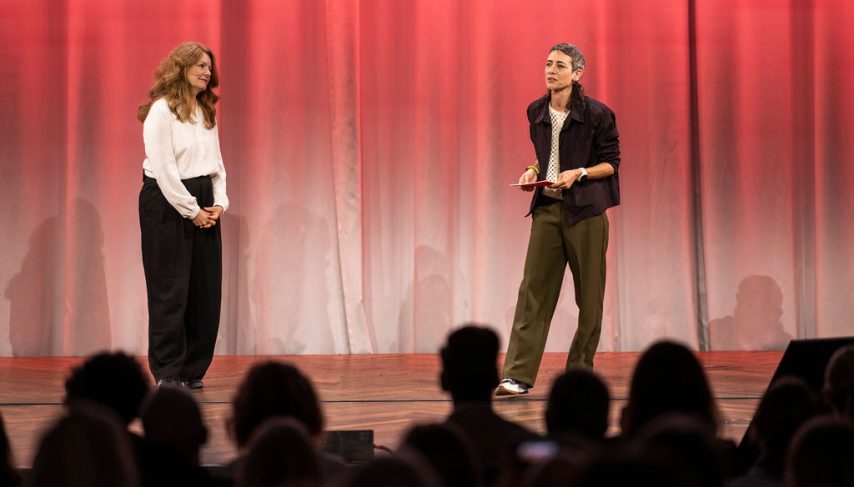
The panel discussion “Between Algorithms and Autonomy” focused precisely on this freedom of decision-making in the age of AI. The discussion centered on issues of transparency, traceability, and efficiency: Are these in conflict with one another? Where do we gain from AI? Where do we lose out? And what will change if funding decisions are increasingly based on data, models, and digital processes in the future?
The panel was moderated by Karsten Timmer, co-initiator of the biweekly web talk #ImpulseStiften and a leading voice in the German foundation debate. He pondered whether AI might make smaller foundations even less visible. Linda Rau of JOBLINGE gAG Hanse, on the other hand, is convinced: Now more than ever, it’s the impact that matters (when all grant proposals sound equally good).
Francesca Giardina of the Mercator Switzerland Foundation deliberately painted a dystopian picture of “dark philanthropy” in the age of AI—while Felix Streiter of the German Carl Zeiss Foundation soberly noted, using a direct comparison as an example, that AI might lead to better (or simply the same) funding decisions as humans. The stage was thus set: There were no ready-made answers in the room, but a clear picture of just how far apart the positions are—and how urgently the sector needs a shared direction.
It’s about the matching, not the algorithm
I had the opportunity to represent Spheriq’s approach on the panel: We need a sector-wide response. In other words, not just more isolated tools—a grant-builder AI for nonprofits here, an eligibility-check AI for grant-making foundations there. If AI-generated grant applications are reviewed and rejected by grant-making AI in the future, that won’t do anything to advance our impact.
The real bottleneck lies earlier: How do we match suitable projects with suitable funding criteria? How do we avoid unnecessary applications without closing off access? How do we highlight what makes an organization unique, beyond a well-written application? This is precisely where AI could open up exciting new avenues. Roman Rüdiger from Anthropia demonstrated how their startup incubator leverages these possibilities to provide, in a low-barrier manner and through casual conversations, the basic information that would otherwise have to be painstakingly written into an application over the course of days.
This is where Spheriq comes in as a digital infrastructure for the sector. When organizational data, projects, funding criteria, recommendations, grant applications, scouting, and reporting work together more effectively, technology can facilitate matching and reduce bureaucracy. AI is not a substitute for sound judgment, but rather a tool that enhances well-structured collaboration. The guiding principle behind this sector-wide approach is to take a holistic view of the philanthropy system and develop solutions collaboratively.
Governance Instead of a Fascination with Tools
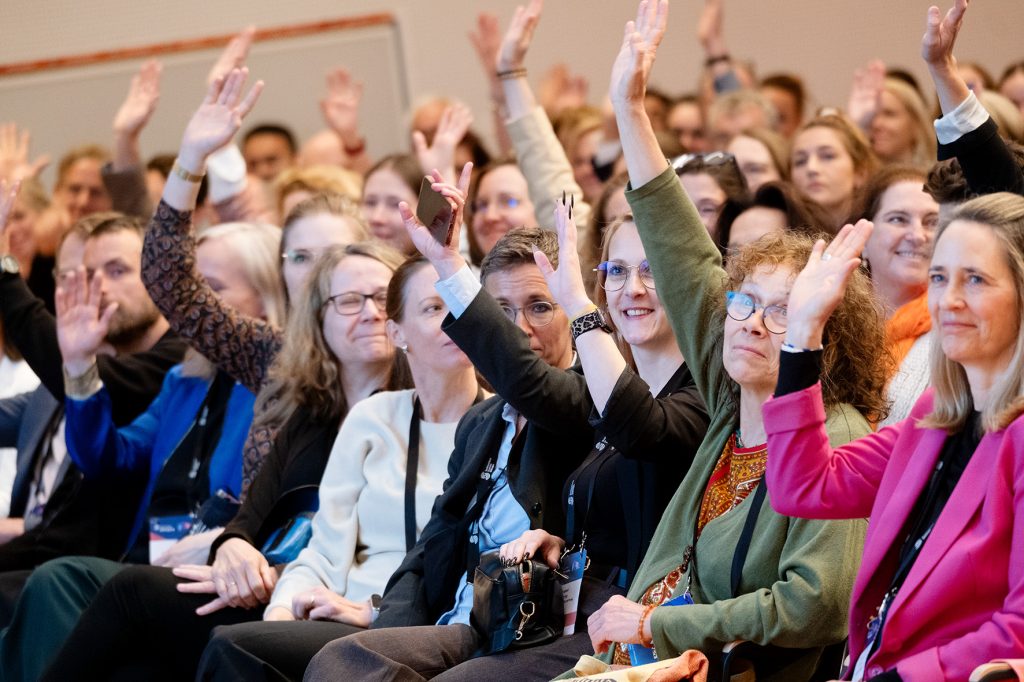
There was also room for practical questions at the German Foundation Day in Hamburg. What data can be processed? Who is responsible? Where is human oversight needed? How are decisions documented? And how do organizations prevent employees from already working with “shadow AI” while officials are still reviewing whether AI can be used at all?
Christian Zappe from Datenschutz Consulting clearly approached the topic from a legal perspective, but combined that with a practical approach. He provided participants with checklists and even templates for application guidelines that can be adapted for their own organizations in just a few steps. From a legal perspective—but also from the perspective of organizational development—AI is therefore a governance issue. Guidelines and clear rules are needed. And training: The AI Act mandates regular training foremployeesin the European Union (currently not yet applicable to Switzerland) if AI is used in their organization.
So, effective use of AI doesn’t start with haste. The Polytechnic Society Foundation clearly demonstrated how important stable data, clear processes, and a controlled approach are. And the presentations from the Civic Data Lab also served as a reminder that it doesn’t always require large-scale AI. Often, the real value begins simply when data becomes easier to find, understand, and put to practical use.
The Freedom to Make Better Decisions
The German Foundation Day has shown that AI has made its way into the foundation sector—but by no means everywhere, not to the same extent everywhere, and not with the same implications everywhere. AI is less of an answer than a question. It forces the sector to examine and reflect on funding processes, power dynamics, and decision-making logic.
That is precisely why it is such a fruitful topic. It challenges foundations to reflect on their freedom—not in abstract terms, but in very practical terms.