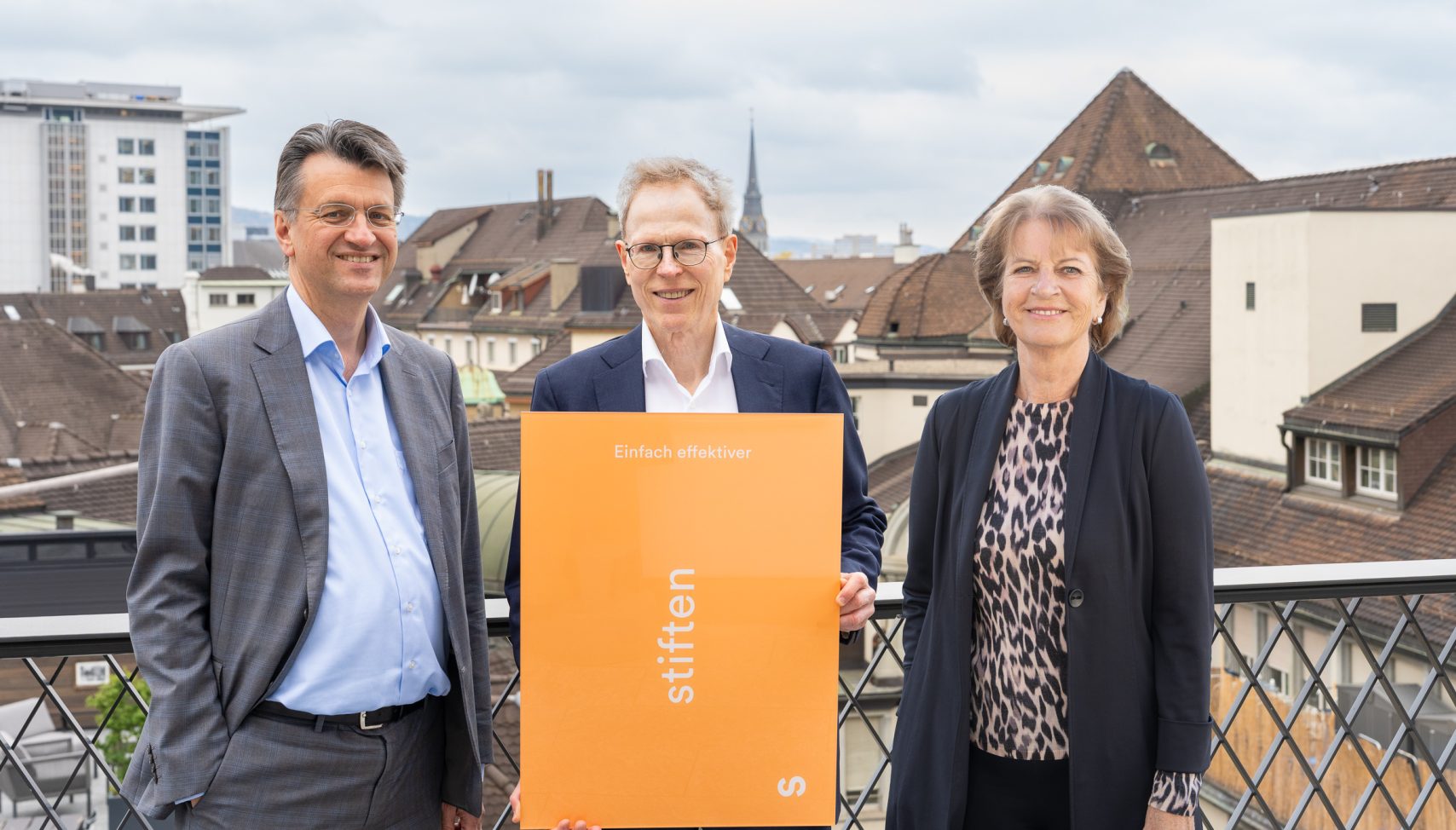
Those who wish to pursue a charitable cause are increasingly turning to the structures of an umbrella foundation. This relieves them of administrative tasks and allows them to focus on the impact of their grants. Our new special report explores what this shared umbrella enables and how much autonomy remains beneath it. To begin, we explain how umbrella foundations work, who they’re suitable for, and how new approaches are transforming philanthropy.
Providing educational opportunities, protecting nature, and strengthening cultural life: Philanthropic engagement often begins with a personal cause. Anyone who wishes to allocate resources to these causes over the long term faces organizational questions. Is it necessary to establish a foundation? Who will handle the accounting, review grant applications, and ensure succession planning? And how much time and money should be devoted to these tasks?
Umbrella foundations provide a shared infrastructure for this purpose. They make it possible to pursue one’s own grant-making mission while drawing on an existing organization and its knowledge and experience. The extent to which this reduces the administrative burden and the scope for customization vary from provider to provider.
A Shared Umbrella for Individual Causes
An umbrella foundation is a legally independent foundation that oversees special-purpose funds or subordinate foundations. These funds may have their own names, specific funding purposes, and governing bodies. However, they do not have their own legal personality. The umbrella foundation always acts as the representative to the outside world; it bears legal responsibility.
The terms used vary widely: people often refer to a sub-foundation, an endowment, or a foundation fund. What matters is what is specifically agreed upon. The umbrella foundation handles bookkeeping, financial reporting, and coordination with auditors and supervisory bodies—and, in most cases, also asset management, consulting, project review, and monitoring of grant disbursements.
This offers significant advantages: it allows multiple funding vehicles to share a professional infrastructure. Donors can get involved in ways that align with their preferences and the agreed-upon areas of expertise. Some contribute their own project ideas and oversee their implementation. Others largely delegate the selection of suitable organizations to the umbrella foundation. This gives rise to so-called thematic funds, which other co-donors can also join. A shared cause, a shared implementation—this kind of pooling also makes the umbrella foundation approach attractive and effective.
Does philanthropy have to be for eternity?
The choice of structure raises another question: How long should the funds remain available? In the case of a foundation designed to preserve capital, only the income is generally available for grant-making. A consumable fund, on the other hand, also uses the contributed assets—for example, over a period of ten years or until a specific project is completed.
This structure is widely used in umbrella foundations. According to the Swiss Foundation Report 2026, 85 percent of the funds reported as of the end of 2024 are designed for consumption. A limited time horizon also creates the conditions for making larger contributions during one’s lifetime and actively shaping how those funds are used. Which solution is ultimately the right fit depends on the specific needs.
This issue has been a topic of discussion in the field for quite some time—and we at *The Philanthropist* have also provided insights on it repeatedly. In the article “Making a Greater Impact Together,” the Rütli Umbrella Foundation explains how personal grant-making goals can be reconciled with the use of endowment capital. Corymbo also relies on spending funds and enables flexible grant-making over time.
A Landscape in Motion
Umbrella foundations can also offer new opportunities to existing foundations. When it becomes difficult to fill positions on the foundation board or when administrative costs place too great a strain on available funds, umbrella foundations offer an attractive path forward: under a single umbrella, the foundation’s mission can be carried out more effectively. According to SwissFoundations, the transfer to a foundation fund is a common reason for the liquidation of a foundation.
At the same time, the umbrella foundation landscape itself is undergoing change. In the summer of 2026, the Swiss Foundation Center by former employees of the Christoph Merian Foundation founded. The independent, nonprofit umbrella foundation aims to pool philanthropic capital—complementing the regionally focused approach of the Christoph Merian Umbrella Foundation. On the side of banking-affiliated providers, the mergers of Accentus, Empiris, and Symphasis with the UBS Philanthropy Foundationn approved. In general, numerous banks have established their own umbrella foundations in recent years in order to offer their clients a modern and efficient vehicle for philanthropy. One example is the ZKB Philanthropy Foundation, which is based in Zurich, a major hub for foundations.
Collective Fundraising, Collective Decision-Making
Abroad, endowment funds are also known as “Donor Advised Funds,” or DAFs for short. The term “Donor Advised” refers to a legal feature of the umbrella foundation model: the person who contributes the assets plays an advisory role in how they are used. They can propose grant projects, set priorities, and monitor the development of their fund. However, legal responsibility and the final decision rest with the umbrella foundation and its board of trustees. The specifics of this advisory role are set forth in contracts and bylaws.
This division of responsibilities also safeguards the donor’s intentions. If the donor is one day unable to fulfill their advisory role—for example, due to old age or after their death—the umbrella foundation ensures that the funds continue to be used in accordance with the agreed-upon purpose. The advisory role can also be exercised collectively, for example within a family or together with the children. Such an “advisory board” can—without any administrative burden—gradually transfer the substantive shaping of the charitable work to the next generation. Joint decision-making thus opens up opportunities to incorporate diverse experiences and perspectives into the foundation’s work.
Demaimpact, an endowment fund operating under the umbrella of the Swiss Philanthropy Foundation, demonstrates how this can give rise to a forward-looking, participatory approach. There, young adults develop funding priorities and select projects for their generation. In 2025, ten 18- to 30-year-olds participated in the selection of six organizations working in the areas of integration, autonomy, and the environment. The shared umbrella structure enables them to take on philanthropic responsibility without having to contribute a large fortune themselves.
New Approaches to Philanthropy
Digital platforms can further facilitate these forms of engagement: They simplify the process of setting up a fund, provide a clear overview of available resources and grants, and support collective fundraising. The German platform b’cause relies on digital foundation accounts based on the DAF model for this purpose. Behind this easy access, the division of responsibilities described above remains in place: Donors help shape their support, while a nonprofit umbrella organization ensures the legal framework.
Co-founder Felix Oldenburg knows the foundation sector from the inside: As the former secretary general of the Federal Association of German Foundations, he helped shape it for years. Today, however, he is also one of its most outspoken critics. In his columns for the Handelsblatt, he criticizes low distributions, a lack of transparency, and a culture of consulting that prioritizes asset protection over social engagement. His call: Assets must be made easier to mobilize for charitable purposes. With b’cause, he aims to create a practical way to achieve this and open up philanthropy to a broader audience.
A proven model with new possibilities
Umbrella foundations combine many years of experience with new forms of engagement. Founded in 1972, the Limmat Foundation is, according to its own statements, the oldest umbrella foundation in Switzerland. It operates its own project center and offers co-donors international experience in the fields of education and social support. Other examples have their own specific focus and pool different types of expertise for grantmaking.
The landscape is diverse: While some umbrella foundations focus on endowment funds for targeted use of funds during the founder’s lifetime, others provide shared structures with carefully managed thematic funds. Still others ensure the continuation of existing funding priorities by deliberately maintaining a broad thematic scope.
Each of these approaches has its own advantages. It’s worth taking a closer look at how much support is desired, how decisions are made, and what opportunities joint funding opens up. In our special report on umbrella foundations, we therefore present various models and explore their strengths and distinctive features. The central question is how shared infrastructure can create more freedom for effective engagement.